Guest lectures

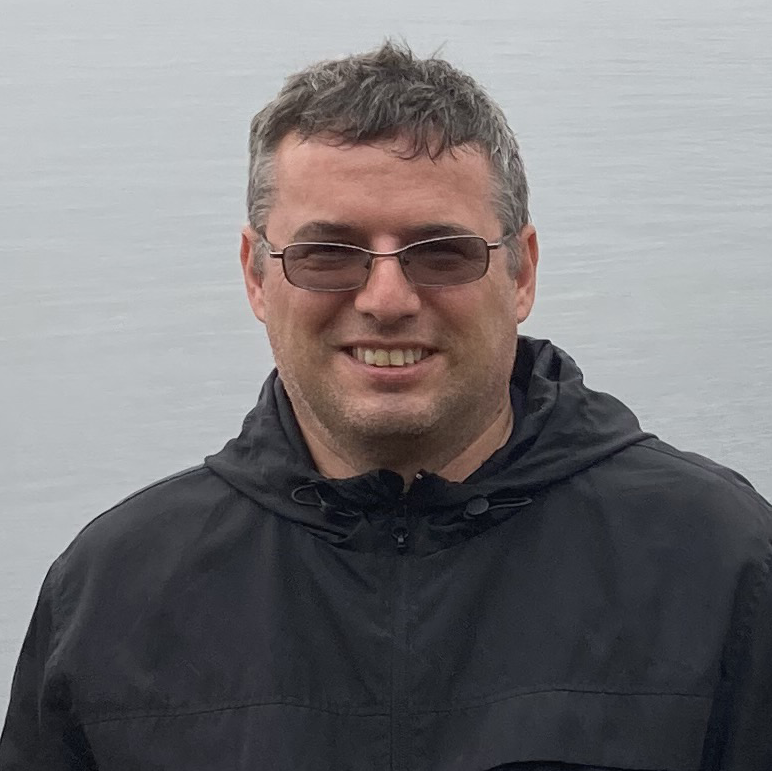
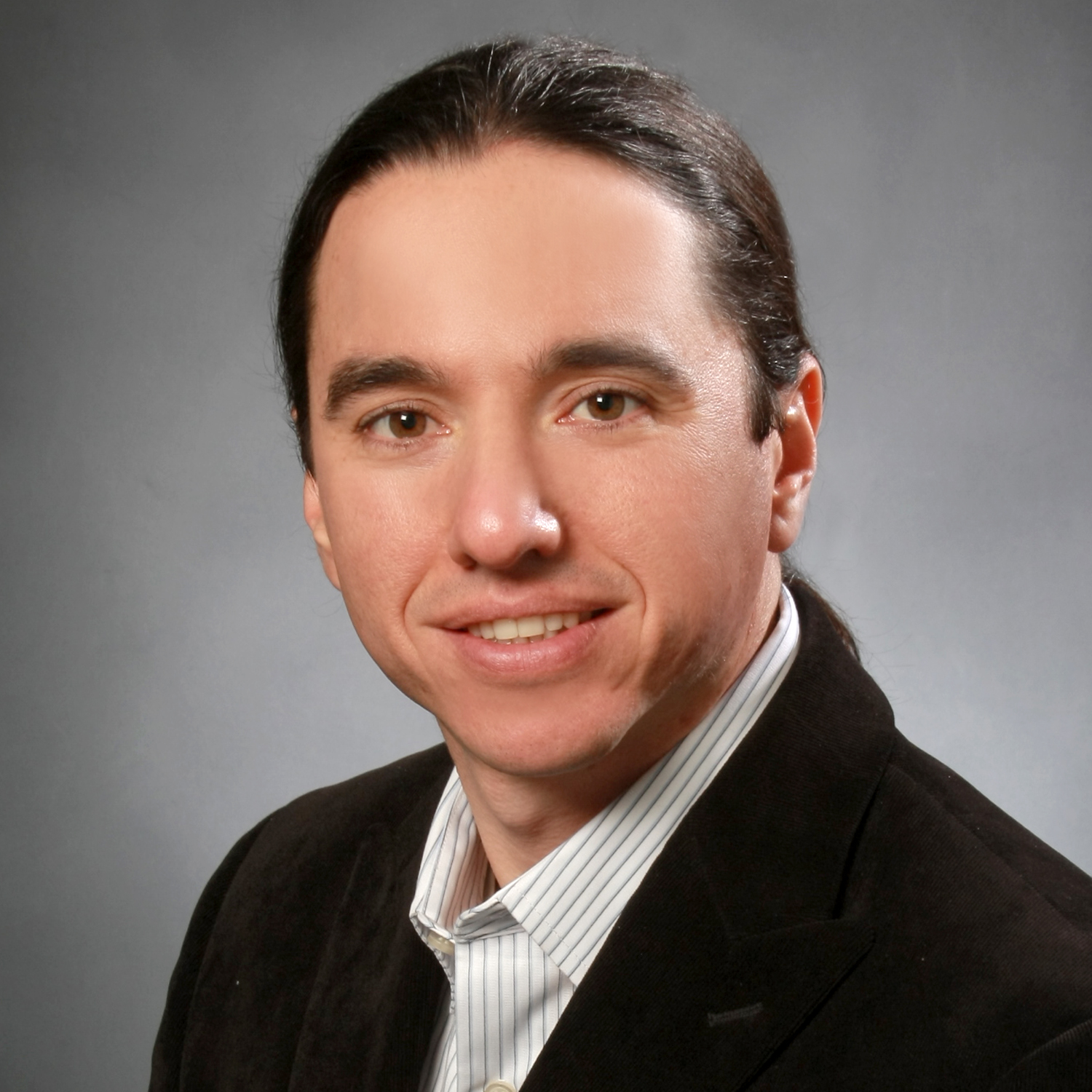
Prof Ralph Metzler's photo

Prof Dr Ralf Metzler

/ Theoretical Physics /

Ralf Metzler is a professor for Theoretical Physics at the University of Potsdam. After obtaining his doctoral degree from the University of Ulm, Ralf was postdoc at Tel Aviv University and MIT, and he previously held faculty positions at Technical University of Munich, University of Ottawa, and the Nordic Institute for Theoretical Physics. He was also a Finland Distinguished Professor at Tampere University of Technology. Ralf mainly works on non-equilibrium statistical physics and stochastic processes, with applications in biological and soft matter. Ralf currently is an Associate of the Higgs Centre for Theoretical Physics at the University of Edinburgh and an Alexander von Humboldt Honorary Polish Research Scholar.
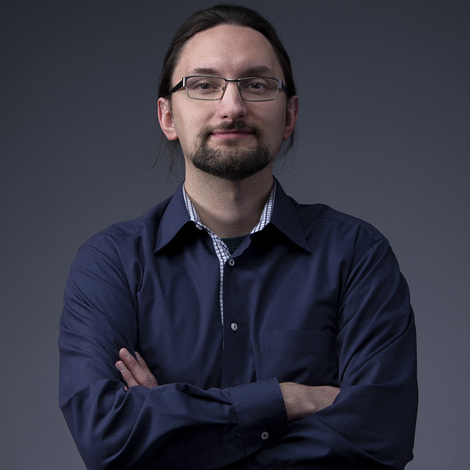
Prof Ralph Metzler's photo

Dr Marcos Rigol

/ Theoretical Physics /

Dr. Rigol is a Professor of Physics at Penn State. Before joining Penn State, he was an Associate Professor of Physics at Georgetown University. Dr. Rigol completed his undergraduate (Summa Cum Laude) and M.Sc. studies at the Institute of Nuclear Sciences and Technology in Havana. He received his Ph.D. in Physics (Summa Cum Laude) from the University of Stuttgart, and did postdocs at the University of California Davis, the University of Southern California, and the University of California Santa Cruz. Dr. Rigol's research interest is in many-body quantum systems in and out of equilibrium, with a focus on the effect of strong correlations. His research is at the interface between condensed matter physics, ultracold atoms, and statistical mechanics. He has published over 150 papers in peer-reviewed journals and has given over 180 invited talks. He received a 2011 Young Scientist Prize from the International Union of Pure and Applied Physics (IUPAP) and the 2019 Faculty Scholar Medal for Outstanding Achievement in the Physical Sciences at Penn State. Dr. Rigol is a Fellow of the American Physical Society and of the American Association for the Advancement of Science.

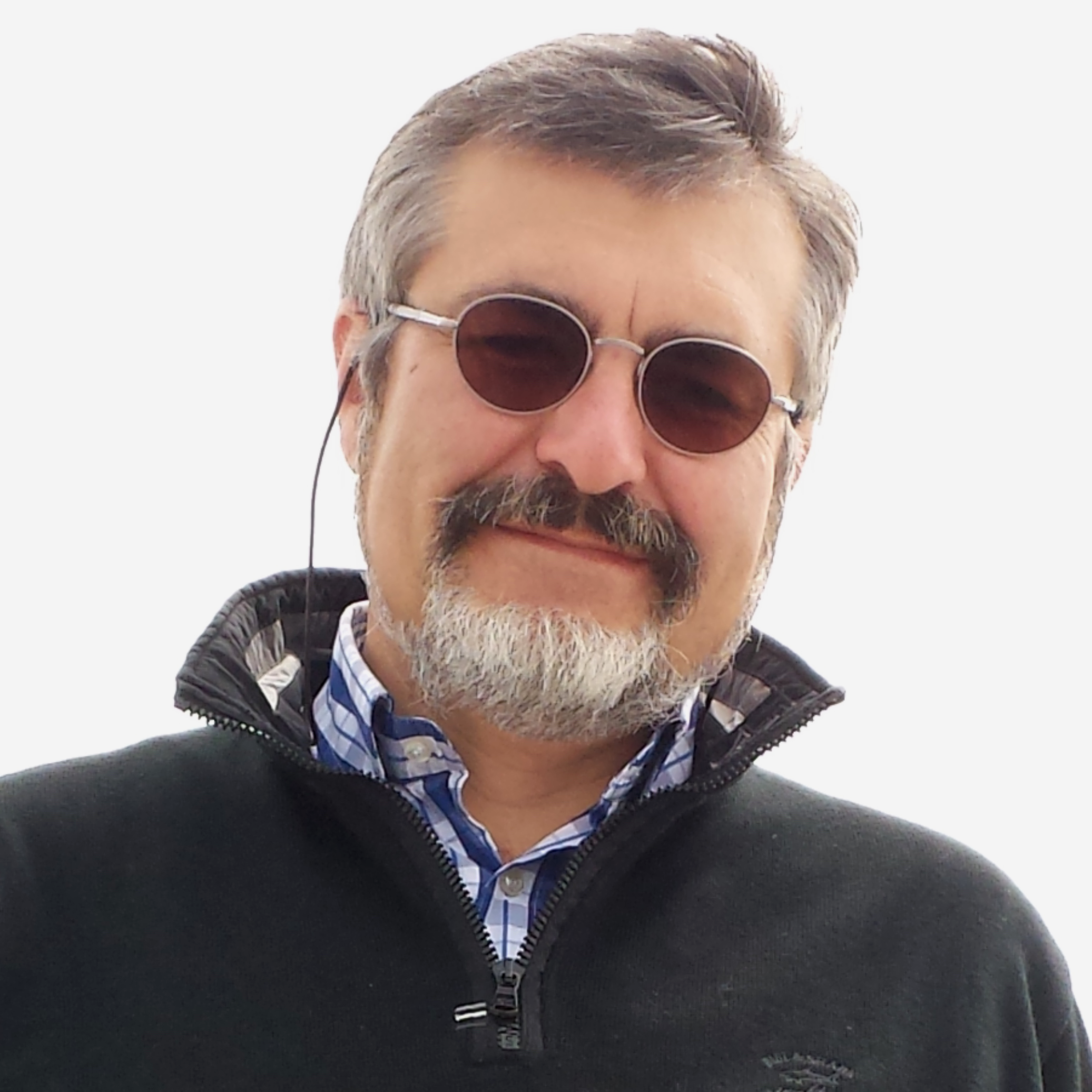
Prof Joseph Indekeu

/ Theoretical Physics /

Professor Joseph O. Indekeu is presently Chair of the Institute for Theoretical Physics at KU Leuven. His research is mostly in statistical mechanics of phase transitions and critical phenomena at surfaces and interfaces. The central topic in his research are wetting phenomena. His most representative works are on the three-phase contact line and its line tension, and also on the interface delocalization transition in superconductors. He teaches general physics to engineering students, and quantum physics and statistical mechanics to science students. Together with his children and with volunteers he performs in a quantum physics cabaret which can be found on YouTube. He has served as Vice-president for educational policy of KU Leuven and as Chair of the Department of physics and astronomy. He is Editor-in-Chief of the journal Physica A and member of the Academia Europaea.

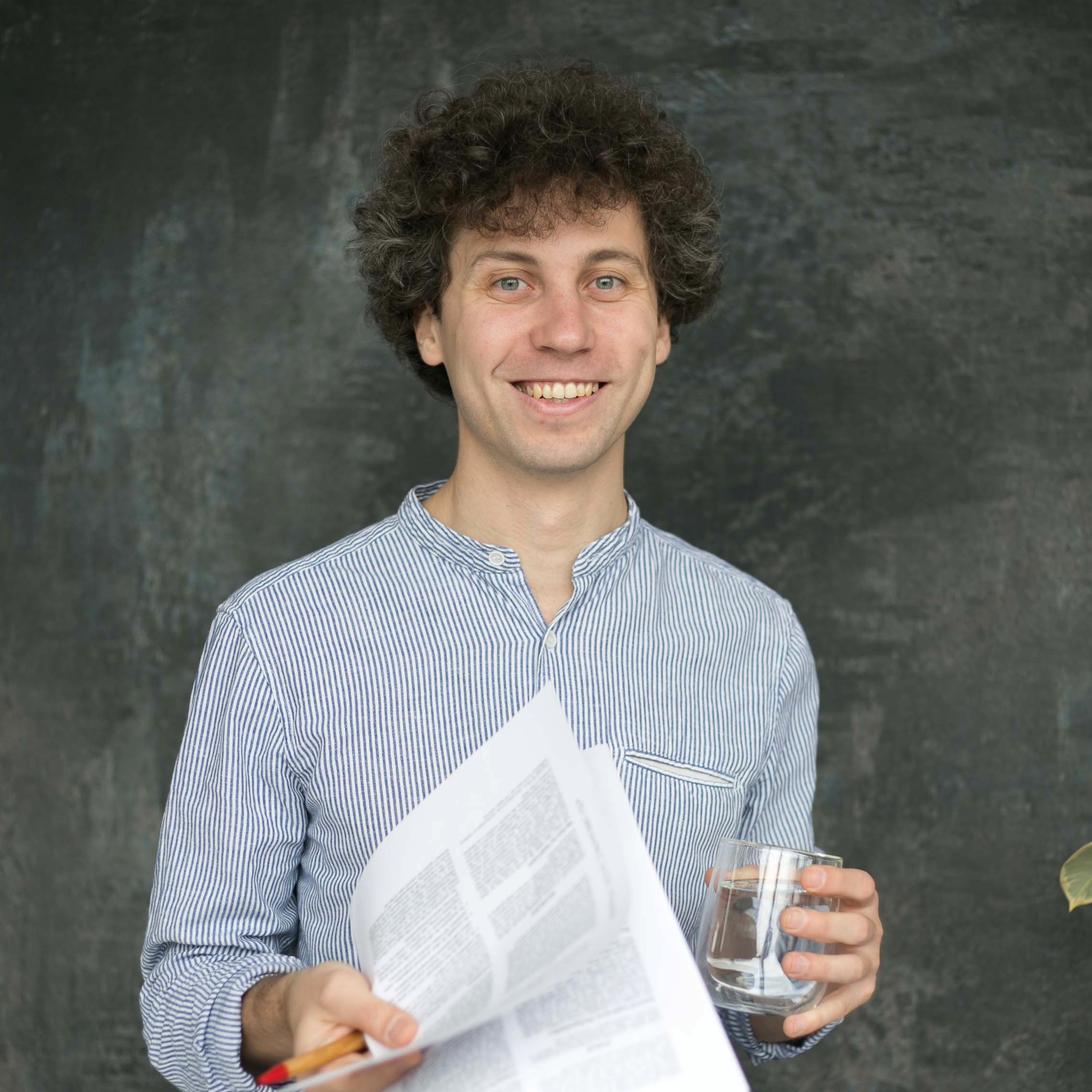
Prof Anatoli Polkovnikov's photo

Prof Anatoli Polkovnikov

/ Quantum Computing /

Anatoli Polkovnikov is a Professor of Physics at Boston University. Anatoli obtained his doctoral degree at Yale University in Theoretical Physics. Then he was a postdoc at Department of Physics of Harvard University. His research interests include many particle systems, especially driven away from equilibrium.

PhD Lukasz Cincio's photo

PhD Lukasz Cincio

/ Quantum Computing /

Lukasz Cincio is a staff scientist at Los Alamos National Laboratory. He was a postdoc at Perimeter Institute for Theoretical Physics before joining LANL as a J.R. Oppenheimer Fellow in 2016. Lukasz specializes in algorithms for near-term quantum computers. He investigates possibilities of demonstrating quantum advantage despite detrimental effects of noise. He is considering hybrid quantum-classical algorithms for fast-forwarding quantum simulations and solving algebraic problems including matrix diagonalization and linear systems of equations. He is also developing machine learning approaches for finding noise-resistant quantum circuits as well as data-driven error mitigation techniques.

Prof Serge Galam

/ Complex Systems /

Serge Galam is a physicist with an international career (Israel, US, France), Emeritus Senior Scientist at CNRS (National Center for Scientific Research) and from 2013 also a member of the Center of Political Research at Sciences Po (Paris), becoming there the first physicist ever. His research in physics has focused on disorder and collective phenomena in condensed matter. In the early eighties he founded the field of sociophysics with several seminal contributions including the dynamics of group decision making, spreading of minority opinions, rumors, voting outcomes, terrorism, coalition/fragmentation among countries. In the fall of 2016, using the Galam model of opinion dynamics, against all odds he predicted the election of Donald Trump but his prediction of a second Trump victory in 2020 failed shortly with the tight Biden election.

Prof Dr Igor Sokolov

/ Complex Systems /

Igor M. Sokolov got his diploma in physics (1981) and his PhD in theoretical and mathematical physics (1984) from the Lomonosov State University in Moscow. He worked in the Theoretical Department of Lebedev Institute of the Academy of Science of USSR before he left for Germany as an Alexander von Humboldt Fellow in 1990. From 1991 to 2001 he hold a position at the University of Freiburg, and since 2001 at Humboldt University Berlin. He is Professor and Chair for Statistical Physics and Nonlinear Dynamics at the Institute of Physics, Humboldt University Berlin.

PhD Mykola Maksymenko

/ Partner /

Mykola Maksymenko is the Research and Development Director at SoftServe Inc., where he drives technological development and research in applied science and AI, human–computer interaction, and sensing. Mykola holds a Ph.D. in Theoretical Physics and his academic research experience includes a number of graduate internships at the Universities of Magdeburg and Goettingen, funded by German funding bodies such as DAAD and DPG, with further postdoctoral research at the Max Planck Institute for the Physics of Complex Systems (Germany) and Weizmann Institute of Science (Israel).

Workshops

Quantum Monte Carlo

The emergence of a variety of methods that allow one to investigate the behaviour of strongly correlated systems has, in the last half of the century, created a new branch of physical research that works as a complement to other, strongly entrenched, techniques. Because of the quantum mechanical stamp and the size of the Hilbert spaces, the complexity that has arisen in the constantly evolving world description separates the possible methods, forcing the scientist to carefully choose one fitting the needs of the theory or the experiment. One of the most prominent ones, the Quantum Monte Carlo approach, seems to be a fine route for examining fragments of the parameter space in a stochastic manner, where the analytic description has not yet found, or possibly may even never find, a reasonable solution. With the usage of models, one can indeed seek to simulate a vast amount of novel materials such as low- and high-temperature superconductors, heavy-fermion materials, or even materials of exotic topological character. During the workshops, an elementary introduction to the world of Quantum Monte Carlo approaches will be presented and, with the focus on the DQMC method, the participants would then be able spot the dozing power of the approach and to understand the fundamental problems one has to stomp upon afoot.

Computational Methods in Quantum Computing

Quantum Computing workshops will be an entry-level introduction to quantum programming. Participants will be introduced to few tools, libraries and platforms that enable us to run code on real quantum computers. After introduction participants will receive exercises which they will be able to do under supervision of instructors from Quantum Computing Circle Qubit. Exercises should show that programming using quantum libraries isn't hard to start and it is possible to do it without advanced knowledge about quantum mechanics. We hope that they will inspire some people to get deeper into this field and because of that we will give links to resources that will enable you to learn quantum programming on your own.

Computational Methods in Theoretical Physics

Overview of computer and programming tools in theoretical physics.
The lecture will take a form of overview and analysis of the most popular tools used in theoretical physics. It'll consist of 3 parts.
First of them will be devoted to wide selection of programming languages and their use in physics: both their cons and pros as well as available libraries aiding in creation of programmes. The second one will be a similar selection. This one however will be devoted to ab initio Tools. Density functional theory and the codes based on it are commonly utilised in almost any study group (or their calculations require parameters, which are often discovered by the use of such methods). The comparison between paid and free software alongside their advantages and disadvantages will be a part of this section. The last component will be dedicated for questions from the audience and discussion of the issues raised and explored during the lecture.

Participants integration

Joanna - an introverted extravert and enthusiast of all things Arctic will host our social ice breakers night! Come join us for a short presentation about International Association of Physics Students followed up by an evening full of games, chats and drinks of your choice!
Joanna studied her BSc at Wrocław University of Science and Technology and currently pursues her MSc at University of Warsaw and serves as vice-president of Polish Association of Physics Students.